
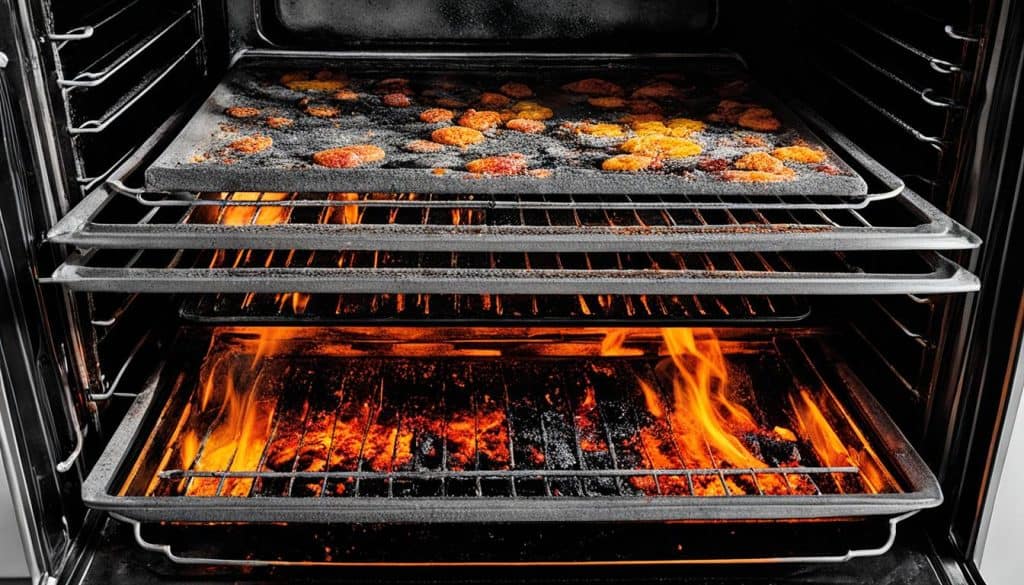
Any home cook knows the frustration of dealing with a messy oven. Among the toughest challenges is figuring out how to remove burnt-on food from the oven floor without hours of scrubbing or the use of harsh chemicals. However, there are cleaning strategies that can simplify this task and restore your oven’s shine. The following guide will introduce you to some of the most efficient methods to tackle these stubborn stains and spills, ensuring your oven is sparkling clean and ready for your culinary creations.
Key Takeaways
- Understanding the right cleaning strategies is crucial for effectively removing burnt-on food from oven floors.
- Utilizing your oven’s self-cleaning function can significantly reduce manual scrubbing effort.
- Baking soda is a natural and versatile cleaning agent perfect for addressing burnt-on food residues.
- Alternative cleaning solutions, both natural and chemical, are available to suit different cleaning preferences.
- Safety precautions during oven cleaning ensure a successful and harm-free experience.
Utilizing Your Oven’s Self-Cleaning Function
The convenience of an oven self-cleaning function cannot be overstated, especially when it comes to removing burnt-on food from the interior surfaces. This built-in feature present in many modern ovens simplifies the cleaning process by heating the oven to extremely high temperatures, turning leftovers and residue into ash. This guide will help you understand the process and how to use it effectively.
When using the self-cleaning cycle, it’s essential to remove all racks and any large debris before initiating the process. Depending on your particular oven model, the cycle can last from 2 to 4 hours. During this time, the oven locks automatically to prevent accidental exposure to extreme heat. As the temperature rises, the granulated buildup commences the removing burnt-on food phase by breaking down into a fine, easily cleanable ash.
However, this process is not without its considerations. Proper ventilation is critical, as the cycle may produce smoke or fumes that could impact air quality within your home. Opening windows and running exhaust fans can effectively mitigate this issue. Once the cycle completes and the oven cools down, which can take some time, the final step involves wiping out the residual ash with a damp cloth. The resulting cleanliness typically rivals manual scrubbing efforts, minus the labor-intensive work.
While the oven self-cleaning function offers a practical solution to a common kitchen maintenance challenge, it should not be overused. High-frequency cycles can wear on the appliance’s components over time. Moreover, if you have a significant accumulation of grease or food particles, it’s advisable to manually remove some of the excess beforehand to prevent excessive smoke and potential fire hazards. Always refer to the manufacturer’s instructions for the recommended usage and safety protocols tailored to your specific oven model.
Overall, this self-cleaning option presents an efficient alternative to the often dreaded task of removing burnt-on food from ovens. By understanding the function and adhering to a few critical safety practices, you can maintain both your oven’s performance and cleanliness with ease.
How to Remove Burnt-on Food from Oven Floor using Baking Soda
When it comes to kitchen cleaning challenges, few tasks are as daunting as trying to remove burnt-on food from your oven floor. Fortunately, baking soda is a versatile and powerful ally in this battle, thanks to its mild abrasive properties and natural deodorizing qualities.
Preparing the Baking Soda Paste
To begin, you’ll need to create a baking soda paste. This can be done by mixing a half cup of baking soda with a few tablespoons of water, adjusting the consistency until it’s a spreadable paste. This paste will be the primary agent used to treat the burnt-on residues in the oven.
The Two Effective Methods
There are primarily two methods you can employ to clean your oven using the prepared baking soda paste:
- The Overnight Cleaning Technique
- The Vinegar Activation Method for Stubborn Residue
Each has its own strengths and is suited for different levels of oven dirtiness.
The Overnight Cleaning Technique
The overnight method is excellent for giving the baking soda paste adequate time to soften and lift the burnt food. The process is straightforward: spread the paste across the oven floor, covering all the affected areas, and leave it to work its magic overnight. In the morning, you can easily scoop or wipe away the now-loosened debris.
The Vinegar Activation Method for Stubborn Residue
If the burnt-on food persists, you may need to activate the baking soda paste with vinegar. Spraying a light amount of vinegar over the baking soda will create a foaming reaction that helps break down the grime. After the fizzing stops, a good scrub and rinse should leave your oven floor spotless.
Safety Tips and Precautions
While using a natural cleaner like baking soda is generally safe, it’s crucial to abide by some basic precautions. Always wear gloves to protect your skin, and ensure the room is well-ventilated to avoid inhaling any particles during the cleaning process. Lastly, make sure your oven is completely cooled down before starting.
Removing burnt-on food from the oven floor need not be an insurmountable task. With a helping hand from a baking soda paste, a little patience, and the right techniques, you can restore your oven’s interior to its original glory.
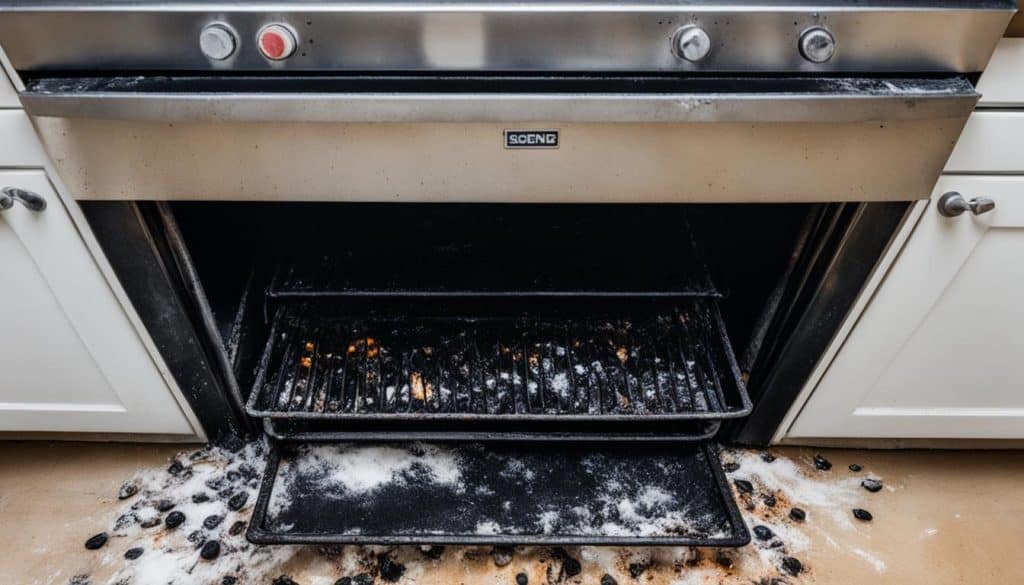
Natural and Chemical Alternatives for Oven Cleaning
While the versatility of baking soda makes it a popular choice for tackling the challenge of an unclean oven floor, exploring oven cleaning alternatives can provide you with a wider arsenal against stubborn grime. Natural cleaners offer an eco-friendly option with reduced health risks, while chemical cleaners come with the might to break down even the most resilient baked-on messes. Each category serves its purpose and addresses different cleaning needs, allowing you to select the best fit for your kitchen maintenance routine.
Among natural cleaners, one might consider the potency of lemon juice or vinegar as a means to soften and lift burnt-on food without introducing harsh chemicals into your home environment. Combining these acidic solutions with heat can enhance their cleaning prowess, providing a natural and effective way to maintain your oven’s cleanliness. Conversely, if you’re dealing with a particularly challenging situation, commercial chemical cleaners—designed specifically for ovens—offer a powerful solution. Brands like Easy-Off and Mr. Muscle have formulated products that can dissolve tough residues, reducing the need for rigorous scrubbing. It’s crucial to adhere to the manufacturer’s instructions and protect yourself with gloves and proper ventilation when using these potent substances.
Whether your preferences lean towards the gentler approach of natural cleaners or the robust efficacy of chemical cleaners, the goal remains the same: a pristine oven floor free from burnt-on food. Distinct scenarios might warrant the use of different cleaning agents, and having a knowledge of both spectrums—natural and chemical—ensures you’re well-equipped for any level of oven cleaning. Ultimately, your choice should consider safety, environmental impact, and the specific cleaning task at hand to ensure optimal results.